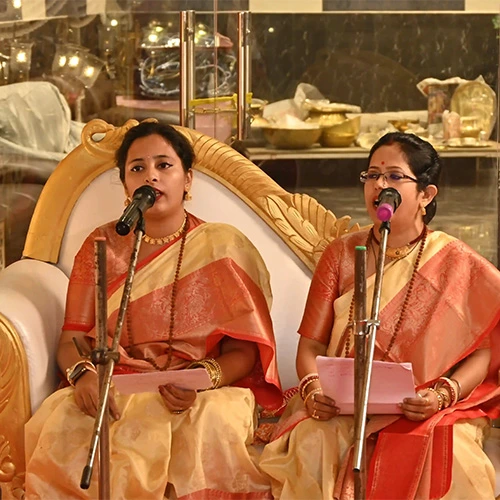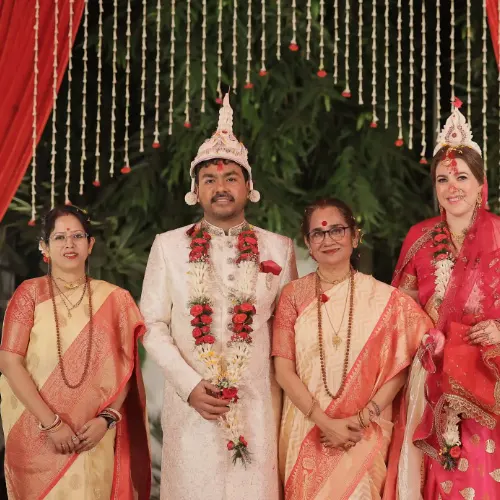
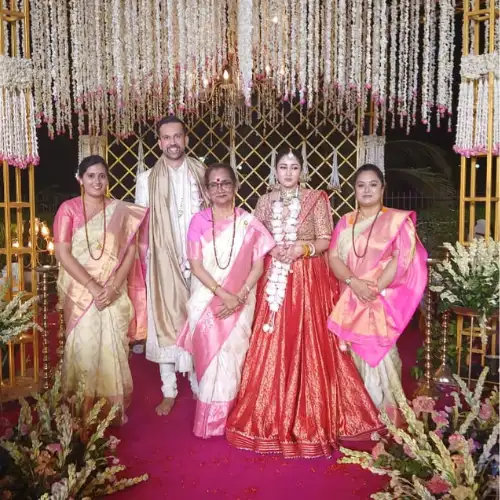
The growing presence of Lady Priests in modern India signifies a profound transformation in the way Hindu rituals are perceived and practiced. For centuries, religious leadership was largely male-dominated, but today, trained women priestesses are reclaiming their spiritual authority with confidence and devotion. This shift reflects not only changing social attitudes but also a renewed understanding of Hindu scriptures, which emphasize knowledge, discipline, and purity of intent over gender. At Sumangalam, we believe that true spirituality thrives when traditions evolve responsibly, allowing rituals to remain relevant, inclusive, and deeply meaningful for contemporary families.
The concept of a priestess in Hinduism is deeply rooted in ancient history. Early Vedic society recognized women as scholars, philosophers, and ritual leaders. References in the Rig Veda, Upanishads, and other sacred texts highlight women like Gargi, Maitreyi, and Lopamudra, who possessed profound spiritual knowledge and participated in religious discourses. Women were educated in Sanskrit and Vedic chanting, and they played an active role in yajnas and domestic rituals. This historical evidence clearly establishes that Lady Priests were once an integral part of Hindu religious life, making their modern resurgence a return to original traditions rather than a departure from them.
Despite their early prominence, women were gradually excluded from priestly roles due to social and cultural shifts rather than religious doctrine. As patriarchal systems became more rigid, access to education and sacred spaces narrowed for women. Misinterpretations of ritual purity and gender roles overshadowed scriptural teachings, leading to the belief that priesthood was exclusively male. Over time, these social customs became normalized, even though Hindu texts never explicitly barred women from performing rituals. Understanding this distinction is essential to appreciating why the revival of women priestesses is both legitimate and necessary.
The revival of Lady Priests in modern India is the result of sustained efforts by reform movements, spiritual educators, and progressive families. Today, women undergo formal training in Sanskrit, Vedic mantras, ritual procedures, and Hindu philosophy. This education empowers them to perform ceremonies with precision and spiritual depth. Increasingly, families are choosing priestesses for weddings, pujas, and life-cycle rituals because of their clear communication, compassionate presence, and ability to explain the meaning behind rituals. This revival reflects a harmonious balance between tradition and modern values.
Social acceptance of Lady Priests has grown steadily across India, especially in urban and semi-urban communities. Younger generations seek rituals that resonate with their beliefs in equality and understanding. As awareness increases, communities are recognizing that spiritual authority is earned through learning and discipline, not inherited through gender. This evolving mindset has played a crucial role in normalizing the presence of women priestesses in temples, homes, and ceremonial spaces.
In today’s context, Lady Priests perform a wide spectrum of Hindu rituals, including weddings, griha pravesh, naming ceremonies, satyanarayan puja, and ancestral rites. Their approach often emphasizes education and participation, helping families understand the spiritual significance of each step. This engagement fosters a deeper connection to rituals, transforming ceremonies from mere formalities into meaningful spiritual experiences.
Inclusive rituals conducted by Lady Priests create a sense of balance, respect, and emotional connection. When women lead sacred ceremonies, it reinforces the universal nature of spirituality and encourages active participation from all family members. Such inclusivity strengthens faith, nurtures harmony, and ensures that rituals remain relevant and emotionally fulfilling in modern households.
At Sumangalam, inclusivity is not a trend it’s a principle. We connect families with experienced Lady Priests who conduct ceremonies with clarity, devotion, and cultural sensitivity. Our rituals are accessible, meaningful, and respectful of diverse beliefs.
Learn more about our Lady Priest Services
Discover our vision and values on About Sumangalam
Explore our complete range of Wedding Ceremonies
By empowering priestess, Sumangalam bridges tradition with modern values, ensuring every ritual feels personal and spiritually fulfilling.
Families across India trust Sumangalam for our ethical approach, experienced priestesses, and commitment to spiritual integrity. Our Lady Priests bring clarity, warmth, and devotion to every ritual, ensuring that ceremonies are conducted with precision and respect. Each service is thoughtfully tailored to meet cultural, linguistic, and personal preferences, creating a deeply satisfying spiritual experience.
1. Can a priestess perform a Hindu wedding?
Yes, a trained priestess can perform a Hindu wedding with full Vedic authenticity.
2. Are Lady Priests allowed in Hindu rituals?
Yes, Hindu scriptures do not prohibit women from performing rituals.
3. What ceremonies can Lady Priests conduct?
Lady Priests can perform weddings, pujas, griha pravesh, naming ceremonies, and more.
4. Does Sumangalam provide Lady Priest services?
Yes, Sumangalam offers trained and experienced Lady Priests for all Hindu ceremonies.
5. How can I book a Lady Priest from Sumangalam?
You can contact Sumangalam through their website or service team to book a priestess.
The rise of Lady Priests represents a powerful return to the inclusive essence of Hinduism. By honoring ancient wisdom and empowering women, Sumangalam is helping redefine Hindu rituals for modern India.
Contact Sumangalam today to book a certified priestess and experience authentic, meaningful Hindu ceremonies guided by empowered women.
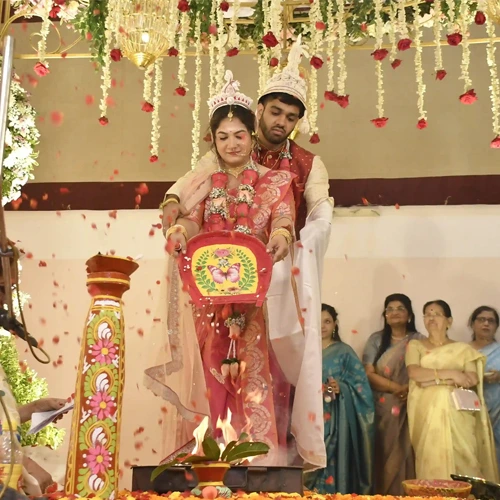
Wedding Service in West Bengal by Sumangalam


© 2025 Sumangalam . All Rights Reserved | Design & Developed by DITS